
Ethiopian Academy of Sciences visited TELA Maize at Dhera Field Site
Dhera, Melkassa — October 11, 2025
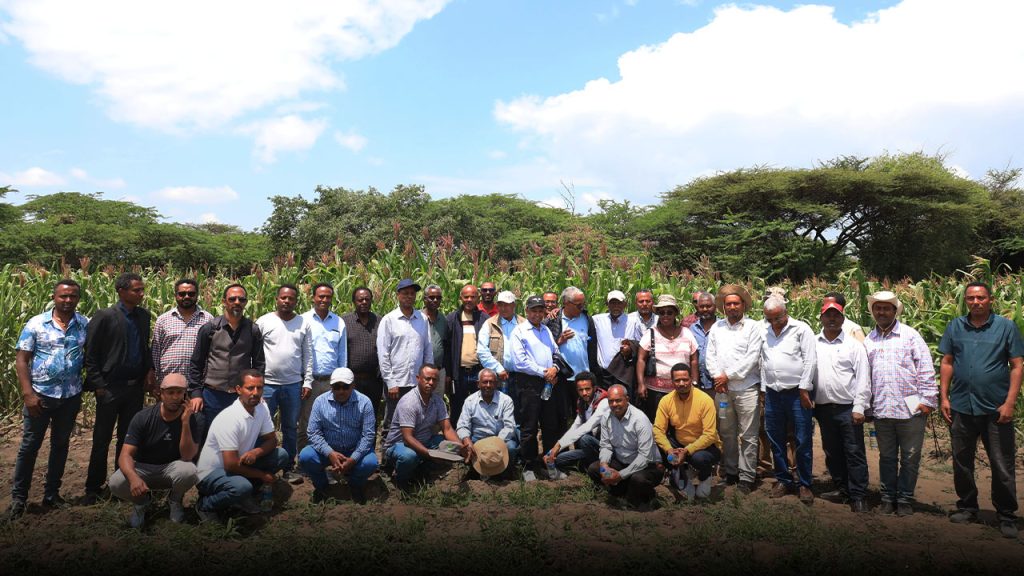
The Ethiopian Academy of Sciences conducted a field visit to the TELA maize demonstration plots at the Dhera site, managed by the Melkassa Agricultural Research Center. The event was jointly organized by the Biotech Maize Seed System (BMSS), the Ethiopian Society of Biotechnology (ESoB), and the Biotechnology and Emerging Technologies Institute (BETin).
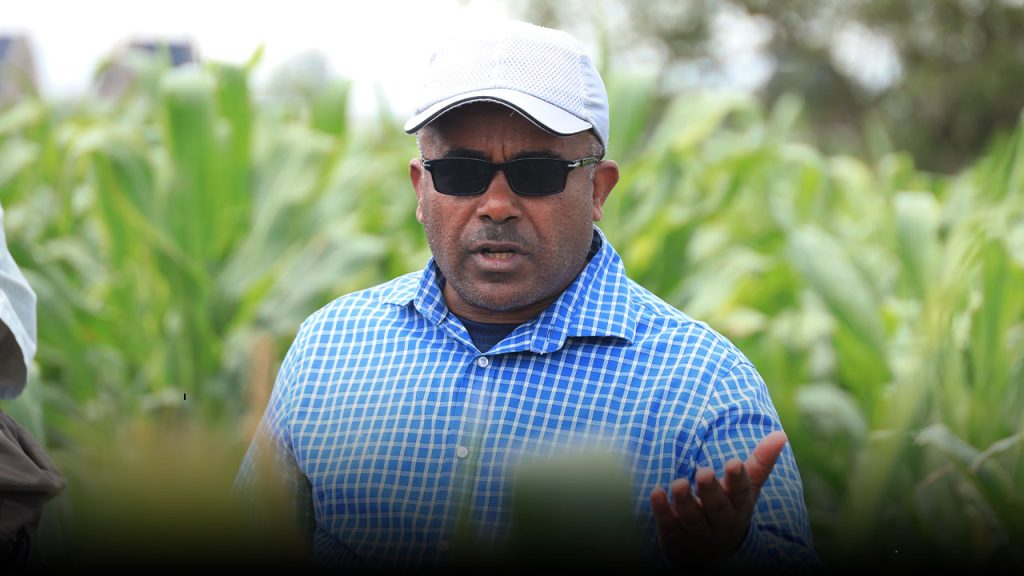
Prof. Firew Mekbib, President of ESoB and coordinator of the event, opened the field day by reaffirming the society’s commitment to evidence-based decision-making. “This product has been tested under our conditions and approved for use by our farmers,” he stated. He clarified that while the research is supported by the Bill & Melinda Gates Foundation (BMGF) through the African Agricultural Technology Foundation (AATF), the decision to adopt remains Ethiopia’s own.
Field Observations: MH142B Shows Strong Resistance
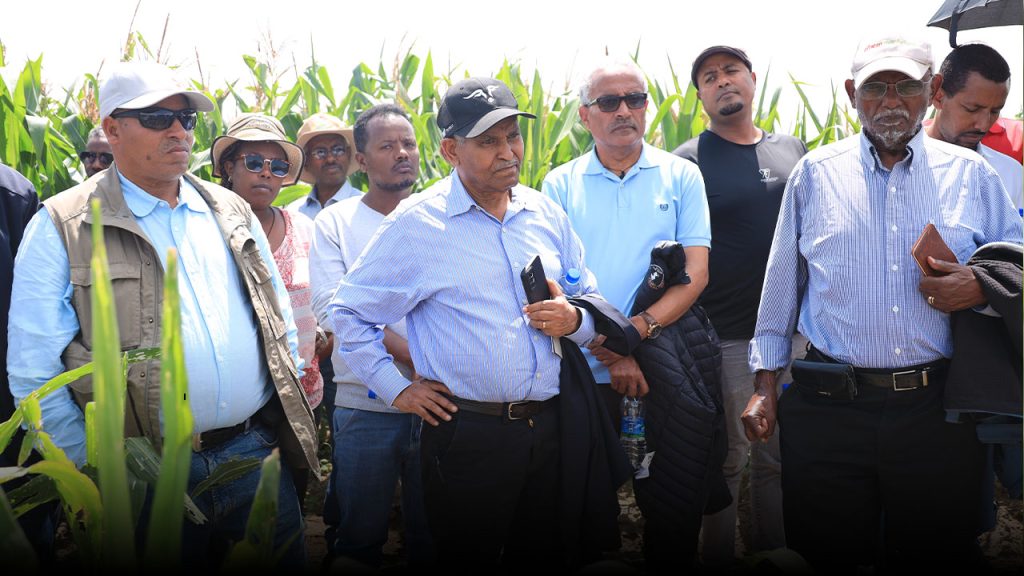
The demonstration featured three maize varieties—MH142B, its isoline MH141, and MH140—planted in 10×10 meters plots and exposed to natural fall armyworm infestation. MH142B exhibited clear resistance without requiring pesticide applications, while MH141 and MH140 needed 2–3 rounds of agrochemical sprays. Participants described MH142B’s performance as a visible and tangible advantage for pest control under local conditions.
The TELA maize initiative aims to protect maize against drought and insect damage, contributing to broader efforts to stabilize yields and support smallholder farmers across Ethiopia. Observers emphasized that seed access, farmer training on stewardship and integrated pest management, and continued biosafety monitoring are essential for responsible and equitable adoption.
Stakeholder Participation and Reflections
The visit included 46 representatives from the Ethiopian Institute of Agricultural Research (EIAR), BETin, and OFAB node coordinators from Jimma, Haramaya, and Addis Ababa universities. Organizers noted that the field demonstration complemented earlier national dialogues and trials that have drawn public and scientific attention to the promise and challenges of GM TELA maize in Ethiopia.
Dr. Berhane Gebrekidan, a member of the Academy and a renowned sorghum breeder, praised the application of biotechnology in addressing agricultural challenges. He highlighted the importance of applying scientific advancements to improve food security and productivity.
Dr. Hailu Dadhi emphasized that the release of TELA maize showcases the power of science. “We cannot escape the growth of science,” he said. “We must embrace and use it to our advantage, or risk falling behind.” He called for stronger collaboration in applying high-end technologies, including gene-edited crops.
Dr. Tesfaye Disasa, BMSS Project Coordinator at EIAR, welcomed participants and explained that the project was initiated to address farmers’ challenges with fall armyworm, especially during drought conditions in areas like Dera. He noted that TELA varieties have exceeded the minimum performance standards required for registration in Ethiopia. However, he expressed concern over negative attitudes from anti-technology groups, which have prolonged the deregulation process from 150 to over 900 daysdelaying farmers’ access to the seed. “While some criticisms are tolerable, the impact on regulatory delays is unacceptable,” he said.
Mr. Derese Teshome, Outreach and Advocacy Team Lead for the project, noted that the existence of the product has helped create awareness more effectively than previous promotional efforts. He stressed the importance of organizing “seeing is believing” events to engage various segments of the community and foster constructive dialogue. He also addressed concerns around seed access, royalties, variety performance, cost, and safety—assuring that BMSS is actively working to address these issues. However, he acknowledged that securing adequate seed for wider demonstrations remains constrained by regulatory conditions set by the Environmental Protection Authority (EPA), and efforts are underway to build mutual understanding and seek joint solutions.
A Call for Evidence-Based Decision Making
Prof. Firew lamented that public perception of GM technologies is often shaped by misinformation and negative attitudes, including from some Academy members. “This event was organized to give skeptics a chance to see the technology firsthand,” he said. “Unfortunately, many did not attend—perhaps unable to withstand the power of science and evidence.” He stressed the need to reduce the influence of fabricated claims and disinformation on leadership and policy, which sometimes manifest in petition letters to the Ministry of Agriculture and the Prime Minister’s Office.
Closing the Visit: BETIn’s New Office and Technology Showcase
The visit concluded with a tour of BETIn’s newly established office at IT Park around Goro Area in Addis Ababa, where participants explored a range of biotechnology displays and received detailed explanations about ongoing innovations. The showcase highlighted BETIn’s role in advancing agricultural technologies and fostering collaboration among research institutions, policymakers, and farmers.
-
OFAB Ethiopia Address
Megenagna, Ethiopian Institute of Agricultural Research
-
E-Mail
-
CONTACT NUMBER
+ 251 91 174 4540